Kiana had been in the wilderness alone. It was against protocol, and exactly what she needed. That’s what she told herself anyway. Lions came to nuzzle her belly, rumbling softly, perhaps due to that acute animal instinct for knowing when something was wrong. Usually they scattered when the Old man came around.
The first time was on the first day of the month, on the first hour past noon. Of course it was. He popped around a tree on those sand scattered Kalahari plains and waved. Kiana started, then bent over the hand-held UV monitor in both her mitts and muttered, “It’s not real.”
On the second day, at the appointed hour, he climbed into the sun-screened Jeep with her with a cheery “Hello!” Her grip tightened knuckle white on the steering wheel. “You’re not real,” she repeated, almost as a mantra. Her bright green eyes shunted her off onto a vision, flashing to the live-feed six weeks past, to the same man, now more emaciated than he’d been at their last contact, seemingly plied with ever-more tubes in every vein. She blinked, jerking to the side, but the man was gone, at least for now.
Twice more she saw him, at a distance paralleling her as she did her job, collecting genetic samples from the indigenous wildlife. It wasn’t normally dangerous work, but it was always better to work in teams. Especially on the Kalahari with its hundred-degree-plus temperatures, sparse grasses, pale sand pans and gnarled camel thorn trees clawing infrequently at the sky. On the sixth day, it almost cost her.
Kiana had sampled some weaver birds but hadn’t been paying enough attention to her surroundings. Which was how the cheetah had stumbled into her. They literally tripped over one another. Luckily Kiana rolled one way and the spotted cheetah the other. Her heart hammered at her ribs with startling ferocity. That was nothing compared to the snarl issuing from the big cat.
Its eyes were cloudy. It must have an older cat who stumbled carelessly into the noonday sun and been blinded. With all the other adverse effects of climate change it couldn’t have been helped. This was not helping her at all, though. Her limbs were still trying not to move. She didn’t seem to have much control over her shrill breathing, something the cheetah’s ears tuned in on with terrible accuracy.
That’s when the Old man stepped around her, waving both long arms and yelling, startling the cat enough that she could get off a shot with her tranq pistol. It took a couple of shots to flatten the agitated beast, but it was done.
The pistol thunked to the brittle yellow grass as the Old Man swung back to her with that familiar grin. “That’s why you shouldn’t be out here by yourself,” he said. “Baby? What’s wrong?”
“…please stop,” she whispered, her overflowing eyes burning. “…god, please stop…you can’t be here…”
“I don’t see why not. The cheetah seemed to agree with me.”
“B-but, Poppa, you’re gone. You’re…y-y-you’re…”
It all came spilling out, all the tears dammed for the past six weeks, all the suppressed emotions, stealing her breath, choking her. The Old Man returned from the truck with a paper bag for her to breath into. He held onto her with soothing words as she hunched over herself, hyperventilating for how long, an hour? All she was able to choke out in all that time was, “forgive me.”
“What for, baby?” he asked.
“I-I wasn’t there, Poppa. I-I didn’t come for the end.”
“The cancer was pretty far along this time. There wasn’t a lot anyone could do.”
As he’d done when she was younger and brought home every stray dog in the neighborhood, teary-eyed, he now dabbed her cheeks with a kerchief that was the same safari-brown as his sleeveless shirt and shorts. “It’s okay, Baby. Say what’s really bothering you.”
She could look at him now, into the smiling eyes that had raised her, the face now smoothed of all aches. “Is heaven real?” she asked.
“It’s better than heaven,” he shrugged. “Go on. You can do it.”
“I can’t.”
“What, the little girl who frolicked with lions? That’s not who I remember.”
“That’s just it. I didn’t want to remember you like that, all wasted away. I wanted you to be strong in my memory. I wanted to remember all the fishing trips with you and Momma. I wanted to remember that big hug you gave me when I came home from my mission.”
“You can still have that. Nothing wrong with that.”
“But I-I’m not ready.”
“I wasn’t. Nobody’s ever ready. That’s okay. I have faith in you, baby.”
“Does Momma hate me, for not coming home?”
He blew a raspberry out the side of his mouth. “Never. ‘Worried’ is more like it. You should give her a call.” Together they stood. “I’ve been allowed this one visit. I’ve probably overstayed it already. Why don’t I help you load that cat in the cage before I get back?”
This was done in no time at all. As she slammed the metal cage shut in the back of the Jeep, he tipped her chin up, chucking her on it. “I’m proud of you, baby.”
She ducked her head with a smile. A stiff breeze whipped through her bones and he was gone. In the depression in the grass where he’d stood, there remained a small red book of Psalms, the one he’d always carried with him for forty years. The one Momma swore she’d buried with him.
“OH LORD we BOW to thee in thankfulness and gratitude that our passage across this desert of space was achieved with only a slight incidence. We lift our voices in our praise that our humble efforts are successful in cleansing our solar system of these loathsome—”
“Pa, we’re too close.”
“Hush, boy. We’re almost done…oh yes. These loathsome aliens who would dilute the purity of our congregants—”
“Pa, I can’t breathe!”
“All right, go to the couch, son, I’ll be right there. Brothers, break the circle to let Nick out. Okay, link up so we can close…BLESS our holy errands as we press forward. Look unto us with favor, and uhh, bless Nick with the peace and tranquility he so desperately needs. Amen, oh Lord, AMEN!”
“Amen,” the half dozen men in the prayer group bobbed their heads in unison and broke from the tight circle. “A masterful prayer,” Pastor Ludden said, patting Beinbouw’s right shoulder. “How is Nick? Is there anything we can do for him?”
“He’s fine,” Bienbouw lied genially. In truth the boy scared him with those wild eyes and sudden fits of temper. He sat quietly on the aquamarine lounge alone, tucking into his food tray. The living area would be a wide-open space, nonthreatening to his erratic moods. The voyage to this remote ice ball had been uneventful indeed, for most of them. Nick had programmed their sleep pods righteously and rigorously. He’d been a quiet, studious boy, well versed in scripture as well as practical engineering. The pods’ onboard sensors regulated their autonomic functions, maintaining their intravenous fluids over the 18-month voyage by data control. No one was quite certain what had gone wrong with Nick’s pod. Maybe he’d been so focused on the safety of his fellow pilgrims, he simply neglected to apply the same care for himself.
Three weeks before planetfall, an error in programming revived Nick from cryosleep. Yet the pod registered that the party had not arrived, so for his safety, in its rigid computer mind it would not break the seal on his pod. When they all awoke three weeks later Nick was screaming, fingernails torn away, bloody scratches like spiderwebs lining the inside of his coffin. The station’s android medic had to administer sedatives for seven days before they could even begin to elicit a coherent word from the poor boy, his only son. The brethren tried to console him, but they weren’t trained psychologists and he seemed to throw a fit in any tightly enclosed space, real or perceived.
Everyone was still scratching their heads over that peculiar fainting incident outside that kaffir woman’s suite. Most of the brethren awoke with puzzlement over how they had ended up slumped together in the beds and on the sofas in their small guest suite. Nick slept the longest, and apparently the most peacefully since he woke trapped in his space pod. At first when he bounded up he seemed normal, almost recovered.
Bienbouw eased onto the cushion opposite Nick, allowing some breathing space between them. Hopefully, enough. “How are you doing, boy?”
“I’m fine, Pa, really. You don’t have to keep asking.” He paused, wetting his lips, gaze turned down to his dinner plate. “Pa?”
“Yes, boy?”
“It stank. In that airlock, it was like burnt steak, a sweet juicy reek, you know?”
“Yes, I smelled it, too,” Bienbouw admitted. “Don’t worry, nobody’s ever died on this space station. It’s just high energy ions that bonded to our sleep garments during the trip here. It’s nothing you need to worry about.”
“Okay. That makes sense. Thanks, Pa.”
“Sure. You take care.” He pat Nick’s leg and left him to finish eating. A hand on his shoulder startled him, but it was only Ludden, his copilot as it were on this grand crusade, the moderating force who kept his baser instincts leashed.
“You’re still thinking about that woman, aren’t you?” Ludden inquired.
“I KNOW her,” Bienbouw persisted. “I’m sure I’ve seen her somewhere before. Some distant memory, a reel—” he scoffed. “It’ll come back to me. I just need to stop thinking about it.” A vibration on his wrist distracted him. One glance at his universal wrist strip displayed a tiny flashing orange light. “Excuse me, brother, I’m expecting a message from home.” They exchanged hand clasps around their elbows. Then Bienbouw ambled to the alcove where their receivers were stabled. The door irised shut behind him.
For a ‘communications hub’ it was roomy enough. Three meters deep and carpeted, with a pair of stools and a blocky communication box with bulbs arranged along its upper panel strip. The middle light stabbed at him, awaiting a response. “A.C.C. post, this is Oren Bienbouw. Ready to receive transmission.”
“Understood,” a stiffly formal metallic voice responded. “Please give your personal passcode to begin receipt.”
“Certainly,” he grunted. Like all codes, his was longer than a comet’s tail. But endless usage had pretty well drilled it into his skull. Without comment the A.C.C. comm ‘bot sent a green light, confirming receipt of his code. The communications stream would take seven minutes to fully connect and secure for maximum privacy. Time enough to reflect.
That had always been the problem with Terra; too many tribes, too much diversity. There was never an opportunity to maintain the purity of the species. Mars would be different; the overlords promised that. Start with a small population, say, a bare million. A work force kept in its place and no intermingling with the lesser races. Shouldn’t have been that hard to keep it so in his absence.
His ancestors had been driven into exile in the aftermath of the Holy Wars. The people had been inexplicably opposed, no, disgusted by the evangelical warriors who’d longed for those wars, knowing it would force Heaven to launch the End Times as promised. That their crusade failed to move Heaven meant little; their FAITH had not been sufficient. The overlords with their billions assured them of a better life, first on Terra’s Moon, and from there to Mars. They never suspected their fate was in the labor class, without recourse to regulations or the protection of socialist organizations.
The absence of a magnetic field to repel cosmic radiation was one complication they hadn’t planned for. How many overlords had perished leading the way from the ruins of Terra—five, twenty? Generating a field powerful enough to protect future colonists seemed impractical at first. There was simply no way to restart the planet’s core. Drilling would take months to reach the core. Explosives were ruled out as insufficient for the job. Luckily there was a viable alternative, via local field generators projecting a magnetic barrier around each outpost. Constant maintenance was essential to keep out the constant barrage of radiation crashing into the planet, but that was a beginning.
Taming the soil was a necessary first step in colonization. The planet was stubborn in that regard. Perchlorates permeated every millimeter of the native soil. There were no Earth-type organic compounds for fertilization, either. It took generations to filter and alter the chemistry of the soil, just within their small agricultural domes, to make agriculture viable, a situation that defied the hubristic dreams of the overlords. At first they were reliant on biodomes supplied with Terran based soils and fertilizers, plus insects suitable for pollination. That was one of the challenges the first stellar pioneers confronted. And then a concession of processed soil bound for Mars was delayed by several weeks, due to the arrival of an alien delegation to Terra. Which meant that their rocket missed its window for launch. Those months meant struggle and deprivation for laborers like Bienbouw’s grandparents. In some cases, it led to suicide. All to accommodate aliens from the stars.
The interminable wait ended. Bienbouw stood taller as the signal booted in, with only a slight buzz of static. A young visage smiled back at him from beneath a yellow safety cap. An oily grime stained his pale cheeks and coveralls, while stubble dabbled his lip and chin. “Oren, brother! How goes the mission?”
“Hello, Gridly, my young lad. We’ve made remarkable progress. And you?”
“It’s going well. Going well,” Gridly nodded, and nodded, whistling. “The overlords are open to a freer labor agreement.” He chuckled. “I guess they realized since we know how to maintain the toilet facilities—and how to shut them down—and they don’t—” He paused as another worker—a black! —handed him a slate, undoubtedly a labor report. Gridly signed it and shook the man’s hand, as if they were—equals? “Abijah, this is Oren. You remember him.”
“Uh-huh. Hi, Oren,” he said and moved on.
“Grid, what’s going on? What are you doing?”
For a moment Gridly’s smiling face seemed to glow with an inner light. Maybe that was the overhead strips lining the below-levels. “I’ve had a chance to mend my ways for the better. Isn’t that the essence of Christian enlightenment?”
“Thank the Maker you’ve kept the women in line—” a slender arm reached across Gridly’s chest to flick a lever. She smiled at Bienbouw, flame haired and freckled, then flounced off. “Oh no.”
“Miss Beth Schreiber! Our oxygen regeneration pump was operating improperly. She reached in and set it right in two seconds flat. The scales have fallen from our eyes, Oren. These women are stronger than I realized before you gave me this assignment. They’re a true asset to the guild.”
A great temptation to rap his head on the wall burned under Bienbouw’s tunic. For a few seconds his vision actually burned red. Huffing seemed to help somewhat. “Grid, I think you’ve forgotten the principals we started on with this revolution.”
“Oren, I’ve read the Book. I think I’m following a path to a just disposition, without the killing we saw on Luna Colony.”
“Wait, is that a robot I see waiting on you?”
“No one’s waiting on me. We’re not overlords down here, Oren. Roger, his name by the way, offers us perspective understanding how to circumvent the overlords, peacefully.”
“You’re working WITH the robots on—wh-what are you working with them on?”
“I’m taking your advice to heart, brother, and you’re right. We’re not free until we’re ALL free. The autonomous people were the first laborers on this colony. They do a majority of its dangerous labor. It’s tedious work and should be rewarded with equal privileges.”
“But they don’t feel pain, they don’t need air. They have no souls.”
“Oren,” Grid shook his head, as though Bienbouw was the wayward child here, “they’re sentient beings, and as such are entitled to the same liberties as our human brethren.”
Bienbouw jumped as a bell rang shrilly. “Oh, gotta get back to work! We’re all looking forward to a big pay raise this week! I love you, brother! Bye for now!” the screen went blank, leaving Bienbouw shaking, backing away from the comm unit before he shoved it off its little table.
“Oren…”
“WHAT?” For a moment the red overshadowed his vision again, until he realized it was his loyal compatriot Ludden. “Forgive me,” he sighed. “I’m trying to absorb some disturbing reports from home.”
“Never mind that for now. I’ve been reflecting on that woman in 1263.”
“You’re still thinking about HER? Remember, Ludden, even such thoughts are sinful.”
“it’s not in that nature. Listen. As long as that woman is sheltering Dr. Jensen, she has a powerful ally.”
Bienbouw nodded, huffing to calm his thundering heart. “How do you propose we ameliorate this problem?”
“I don’t know. But this may require extreme measures.”
His gaze shifted to Nick, sitting on the edge of his couch cushion, twitching as soon as anyone as much as brushed past him. “He can’t make another passage. I can’t abandon him.”
“Then focus, man. Our stand must be made here.”
Bienbouw nodded, meeting Ludden’s stare firmly. “We started something good on the fourth planet, my friend. Something pure. We won’t allow it to be diluted by any alien inbreeding. Our race will seed the stars, in all its white purity.”
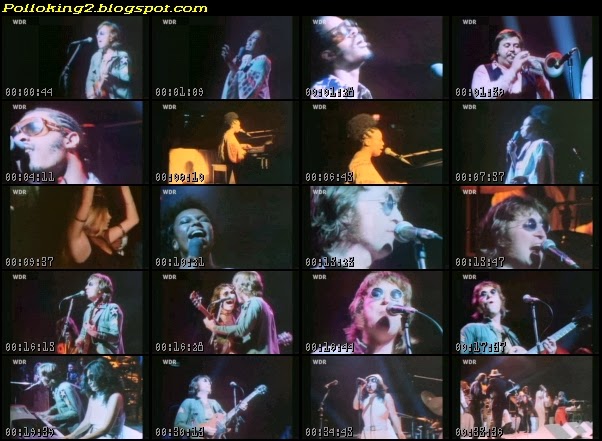
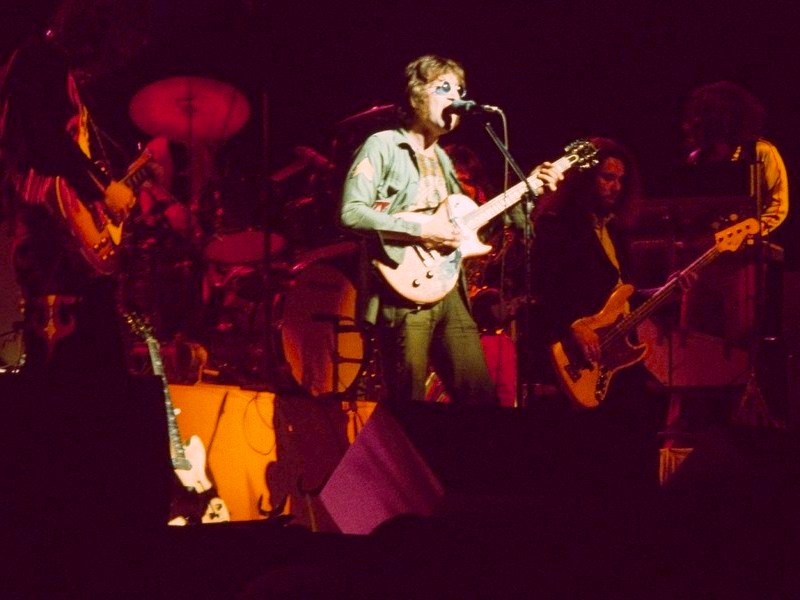
On August 30, 1972, John Lennon delivered his biggest concert performances in Madison Square Garden in a benefit for needy children. It would be a last moment of glory before the Nixon administration piled on him. The concerts were intended to raise money for Staten Island’s Willowbrook State School for children with intellectual disabilities, a place where horrifying conditions of overcrowding, neglect and abuse were brought to light in an expose by Geraldo Rivera earlier that year. He came all the way to San Francisco to meet John and Yoko to convince them to perform.
The Plastic Ono Band was no stranger to benefits, having done the 1969 UNICEF benefit at the Lyceum Ballroom with George Harrison, as well as the John Sinclair rally and the Apollo benefit for the families of the Attica Prison inmates in 1971. These would be John’s only full-length concerts as a solo artist, apart from his appearance at the Toronto Rock and Roll Revival in September 1969. The proceeds would go to establish new accommodations for the residents of the Willowbrook institution.
For this concert he recruited Elephant’s Memory, a New York group, as his backup band. According to their bassist, Gary Van Scyoc, the band met the Lennons in September 1971, recording a live set for a Long Island radio station. That tape wound up with Jerry Rubin, who passed it on to John, and for all we know Yoko still has her hands on it. Elephant’s Memory would be their backing band for Sometime In New York City as well as Yoko’s solo album Approximately Infinite Universe (released January 1973).
As Rolling Stone’s Jann Wiener described it, “John and Yoko permitted themselves to be exploited in this way because they were trying to clean up their act, to impress the immigration authorities that they were good citizens.”
Paul McCartney came close to performing a set but bowed out due to concerns about how Allen Klein would handle the proceeds. That would be a legitimate concern; George Harriosn was livid at how Klein had mishandled the money raised from the Concert for Bangladesh only a year earlier.
Sha Na Na, Roberta Flack and Stevie Wonder were also at the show, but John Lennon was the headliner. For once Yoko actually SANG, instead of just screaming, but don’t worry. She put in her share of wails. John did both an afternoon matinee and an evening show. The evening performance is believed to have been the better show. According to a New York Times review, “Some of the rough edges of the afternoon performance were smoothed off for the evening show. Interchanges between the Lennons and Elephant’s Memory began to jell, aided in no small measure by Jim Keltner’s drumming.” (“Lennons’ Elan Infuses ‘One to One’ Garden Concert” by Don Heckman, August 3, 1972).
Sha Na Na Playlist: “Yakety Yak”—“Tears On My Pillow”—“Tell Laura I Love Her”—“Rock & Roll is Here To Stay”—“Rama Lama Ding Dong”
I remember watching Sha Na Na with my Dad in 1977, between divorces to his second wife. One of the joys of that show was the endless pranks they played on their celebrity guests. They were a 1950’s revival group popular in the ‘70’s. I didn’t know they’d sung at Woodstock in 1969, right before Jimi Hendrix closed the festival at 7:30 Monday morning, August 18. They were also one of the highlights of Grease (1978); I believe they were allotted a whole side of the 2-record soundtrack. Two of the songs they performed that day, “Tears On My Pillow” and “Rock and Roll is Here to Stay” would be done during the dance scene in Grease.
There was an aura of innocence to their music, the illusion that all’s right with the world. That’s probably why 1950’s nostalgia was so big in the 70’s; it’s what our country needed after spiraling into a national malaise after Vietnam and Watergate. During “Tell Laura I Love Her”, the audience banged tambourines with the band. I hope John appreciated their energetic performance; this was the music that shaped him, this early rock ‘n’ roll magic.
Roberta Flack’s Playlist: “Reverend Lee”—“Somewhere”
Roberta Flack did not appear at the afternoon show. I wish I could have found some video or audio tracks from this concert, but no such luck. Nevertheless, she was a star in her own right. In Don Heckman’s article he states the “black goddess of music proved that her hit song, “The First Time Ever I Saw Your Face” was not a one shot phenomenon. She came out and entranced the audience with a program that blended her sometimes unrecognized ability to play superb jazz with her well known gifts as a fine pop vocalist.”
Stevie Wonder’s Playlist: “For Once In My Life”—“If You Really Love Me”—“Superwoman”—“Heaven Help Us All”—“Superstition”—“Keep On Running”
Stevie Wonder was no stranger to the Garden. He’d spent most of 1972 supporting the Rolling Stones on their Exile on Main Street tour. He’d played four shows with the Stones by the end of July with his band, Wonderlove, which included young up-and-coming musicians such as Ray Parker Jr on rhythm guitar and Greg Phillinganes on keyboards. His appearance at this concert was part of Berry Gordy’s plan to expose him to a wider, more diverse audience.
He gave an energetic performance, albeit of the same songs he’d been playing all summer. But he brought the audience alive with a new song called “Superstition”, which turned out to be an even funkier version than what was soon to be committed to vinyl, with Trevor Lawrence blasting an even livelier sax solo. “Keep On Running” closed to the shriek of a police siren.
John and Yoko’s Playlist, afternoon matinee: Power to the People (excerpt)—New York City—It’s So Hard—Move On Fast (Yoko)—Woman is the N—– of the World—Sisters O Sisters (Yoko)—Well Well Well—Born in a Prison (Yoko)—Instant Karma (We All Shine On)—Mother—We’re All Water (Yoko)—Come Together—Imagine—Open Your Box (Yoko)—Cold Turkey–Don’t Worry Kyoko (Mummy’s Only Looking For Her Hand in the Snow) (Yoko)—Hound Dog
Evening playlist: Power to the People (excerpt) with introduction by Geraldo Rivera—New York City—It’s So Hard—Move On Fast—Woman is the N—– of the Word—Sisters O Sisters—Well Well Well—Instant Karma—Mother—We’re All Water—Born in a Prison—Come Together—Imagine—Open Your Box—Cold Turkey—Hound Dog—Law and Order (statement read by Yoko)—Give Peace a Chance (reggae version)
Five songs performed at these shows, especially Yoko’s, would be drawn from their Sometime in New York City album, released only two months before in June of 1972. Putting that aside, in the past four years John especially had recorded a small but impressive body of albums and singles to draw on. I write this in hindsight, as I was only eight years old at the time of these concerts. Shall we begin?
Over the screams of the audience comes the chant, “Power to the People”, after half a minute it burns into an electric performance of “New York City”. John came onstage in a green army jacket and blue tinted Granny glasses. No politics here, just a homage to John’s adoptive home that thoroughly outdid the studio version. He closed the evening show by shouting “What a bad-ass city!”
Then he growled through “It’s So Hard” and for all the complaints about the matinee being the weaker concert, I think John brought a lot of enthusiasm to his performance. After the drum roll closed the song, John called, “Welcome to the rehearsal.” Lest we forget the other half, Yoko shouted through a new song, “Move On Fast”, a fast paced number that John laid down a decent groove.
“This song is one of those songs of ours that got banned,” John joked, “something Yoko said to me in 1968, took me until 1970 to dig it.” On the count of “one-two-three-four”, the sax opens ‘Woman is the Nigger of the World”. Most people can’t read past the big N-word in the title, which was the point. The song is provocative—it’s SUPPOSED to be provocative! Sadly it’s words are just as relevant now as they were fifty years ago. After the last lyric, “We make her paint her face and dance,” John shouted “Dance—Dance—Dance!” like a wild man, just to emphasize the point.
“This song has the same message, it’s just put in a way she puts it,”, John said. Then Yoko shouted, “This is the time of change! Wake up now!”, jumping right into “Sisters O Sisters”. Yoko was really singing this time, or at least she was trying. John gave the solo a 1950’s rockabilly spin. At the end of the song John called out, “Thank you, sister! Reggae, baby, reggae! They do it in Jamaica and London, they’re gonna do it here one day.”
Next up was John’s “Well Well Well”, from his Plastic Ono Band album. John was not like Mick Jagger, dancing all over the stage; he could be carried away by the music and just rock in one spot. He slipped in a cute addendum: “She looked so beautiful I could eat her—I did!” His anguished screams were still not as distressing as Yoko’s. (He did that twice in the matinee show, once in the evening show.)
“Born in a Prison” was Yoko’s second of three songs of hers from Sometime in New York City. The poetry of this song is gorgeous; if it’d been sung by Joni Mitchell or Joan Baez, it would’ve been legendary. With Yoko singing, well, not so much. Still, “wood becomes a flute when it’s broken” remains a beautiful lyric. I’m not sure she and John harmonized very well. In fact, in the evening performance his voice sounded very strained; Yoko in contrast sung more relaxed. I hope they had water on stage when she started yelling “Let me out-Let me out!”, again and again over the saxophone. (And you’re only reading this: God help those people who were there enduring it!)
“Let us pray the choir comes in on time,” John said, hunched behind an organ for “Instant Karma”. This was the only time he actually performed this song live, as well as most of the rest of his tunes. For the evening show he quipped, “I’m just beginning to understand what this record was about,” bringing an extra bit of energy to his performance. After closing the song in the matinee, John remarked, “we’ll get it right next time.”
The spotlight that shone on John seemed to isolate him starkly behind the keyboard. “This number we’re gonna do now, everybody thought it was about my parents, but it’s about all parents, alive or half-dead.” In his review, Heckman wrote “Mother” was a “smashingly passionate song that drew a shouting, emphatic reaction from the young audience.” The delivery was as haunting as the studio recording, but John shredded the vocals far more powerfully in this concert. For the evening performance he embellished his comments from the afternoon by prefacing, “This is another song from one of the albums I made since I left the Rolling Stones!” I’m sure the audience appreciated that.
Yoko was back for “We’re All Water” The lyrics were slightly different from the album, although I always thought this line was hilarious: “There may not be much difference/ between Chairman Mao and Richard Nixon/if we strip them naked”, although she also compared Nixon to Hitler. And no, we’re not spared the shrieking that closes the number. Her screaming “What’s the difference!” actually seemed more defiant.
“Let’s go back to the past, just once, alright,” John said in the evening performance, “Something about a flat top, that’s all I know.” Elephant’s Memory joined him in a raw, almost spooky rendition of “Come Together”, stretching the song in ways I don’t think he could have with the Beatles. He confused some of the lyrics, which was par for the course for John; he often forgot the words to his own songs while performing with the Beatles. Approprietly enough, after the third chorus he sang, “Come together—right now—STOP THE WAR!” the audience roared their approval; at the time of this concert, young people were still serving and dying in Vietnam.
“This song is more about why we’re here, apart from rocking and that,” John opened the evening performance for “Imagine”. He never did a bad performance of this song. The keyboard offered a ringing quality, while he amended the final lyrics to “Brotherhood and sisterhood of man.”
“This is a song that was banned in America but I don’t see anything wrong with it actually”, Yoko said of the next song, “Open Your Box”.
“It’s so banned, we didn’t even notice ourselves,” John added. Lyrics such as “Open your box—open your legs” may have had something to do with that. At the evening concert Yoko commented, “I think they banned it because I’m a woman.” The drums and guitars laid down a thumping groove. That organ solo was also grand.
In the matinee, the following song stopped after a false start. “Start again! Stop-stop-stop!” John shouted. “Okay, we haven’t been in two weeks of hell of doing that for nothin’!” the evening show went smoother. John quipped, “This is something that happens to all of us, one way or the other.” No false starts for “Cold Turkey” this time, just one of the most intense vocal-guitar-sax assaults of all time. John’s shrieks may have been even more terrifying than on the single, and that scared the shit out of me in ’69.
This segued into “Don’t Worry Kyoko”, appropriately enough since it was the B-side of the “Cold Turkey” single. As painful as this was at Toronto or the Lyceum ballroom, in fairness she poured her mother’s anguish into the vocals. This performance was only four-and-a-half minutes long, as opposed to the 40 minutes she subjected attendees to at the Lyceum. And this was only for the afternoon concert.
For the last number of the matinee, John reached back into his rock and roll roots for an enthusiastic rendition of “Hound Dog”. For the evening performance, an otherwise perfect performance was spoiled by Yoko’s howling behind John. Love it when he shouts, “Elvis, I love you!” near the close.
“Hound Dog” had closed the afternoon concert. The evening show ended slightly differently. Following “Hound Dog”, as an encore, behind a driving groove Yoko reads a statement, “Law and Order” “by a well-known politician”. It might have described the turmoil of the early 1970’s—student unrest, fear of communists and the threat of Russia. The kicker was this statement was given by Hitler in 1931.
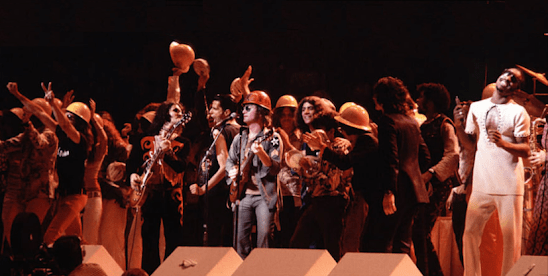
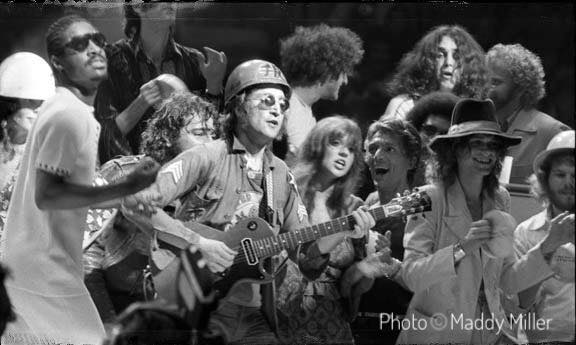
The Lennons were joined in the finale by Sha Na Na, Stevie Wonder, Roberta Flack, the cast of Godspell, Abbie Hoffman, Allen Ginsburg, Melanie Safka and others to sing a reggaefied version of “Give Peace a Chance”. Melanie was another Woodstock veteran, appearing on day one, (August 15, 1969), only three years prior. John and Yoko had invited Melanie to perform. She almost missed the show but made it to the stage in time for the finale. They did justice to the song, I’ll give them that. Stevie Wonder joins in at three minutes—but did it have to be 10 minutes long?
After the concerts, John and Yoko and all the other artists joined a celebratory party at the Tavern In The Green in Central Park. The concerts had raised over $1.5 million dollars for Willowbrook. John was hyped to do more live shows like this. Maybe he would have if he hadn’t got caught in an immigration battle with Nixon over the next couple of years.
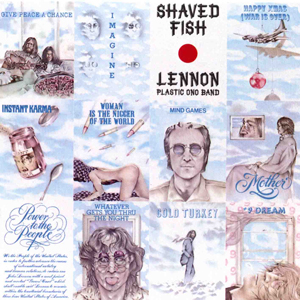
Available on: This is something of a mixed bag. In order, then. To my knowledge, none of the other artists have had an official release of their performances from the One to One concerts. An excerpt of “Give Peace a Chance” from the evening concert featuring Stevie Wonder, segued into the tail end of “Happy Xmas” on the 1975 compilation Shaved Fish.
Both concerts were professionally filmed. The recording supervisor for the shows was Phil Spector. A version with seven songs from the evening concert (“Come Together”, “Instant Karma”, “Sisters O Sisters”, “Cold Turkey”, “Hound Dog” and “Give Peace a Chance”, with “Imagine” played to scenes of the One to One fun day activities in Central Park that afternoon) was transmitted on ABC-TV in America, as a 53 minute special, on December 14, 1972. Yoko’s afternoon performance of “Move On Fast” received a rare one-off screening in England during the January 20, 1973 edition of BBC2’s late night show, The Old Grey Whistle.
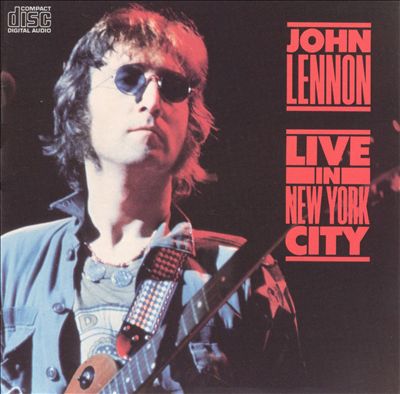
The 1986 posthumous album Live in New York City consisted primarily of songs from the afternoon set, with the exception of “Cold Turkey”, “Hound Dog” and an extremely truncated version of “Give Peace a Chance”, which were taken from the evening show. Even that involved some editing; the spoken intro for “Hound Dog” was taken from the afternoon show, while the performance was from the evening show. Yoko’s music was not included to make an exclusively John Lennon LP. A concert film of the same name was broadcast on Showtime in the same period, and released as a one-hour VHS, with different edits and the inclusion of some of Yoko’s songs.
Three songs from the evening show, along with Geraldo Rivera’s introduction, were included on the 1998 box set John Lennon Anthology: “Woman is the N—– of the World”, “It’s So Hard” and “Come Together”.
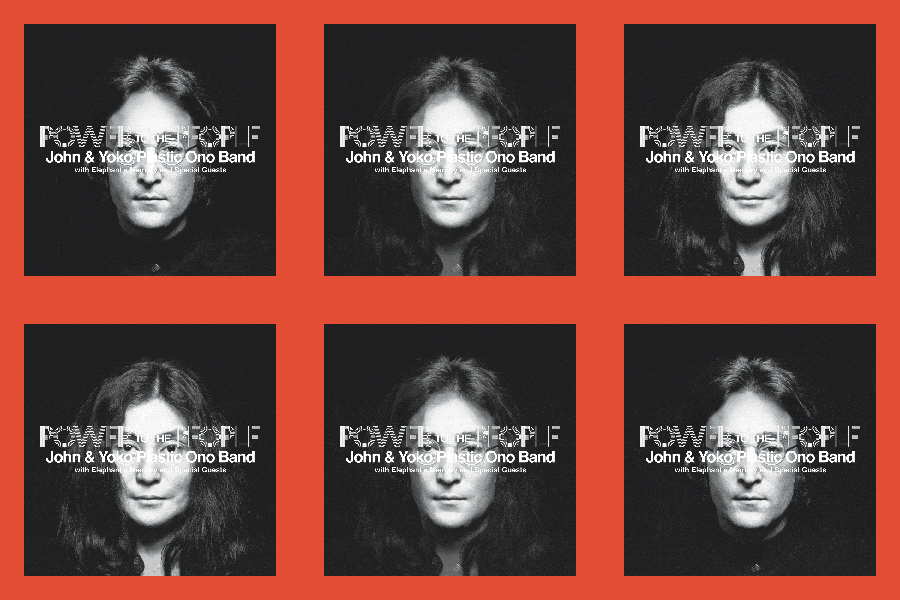
I’d like to say 2025’s Power to the People 9-CD box set finally released the entire concert on its first two CDs, except for some ungodly reason, Sean Lennon removed “Woman is the N—– of the World” (due to cultural sensitivity) as well as Yoko’s ‘Sisters O Sisters” (apparently for lack of space) from both the afternoon AND evening concerts. That’s essentially four songs deleted from the shows. We’ll see if he can get the job done right on the Blu-Ray of the concert, should Sean decide to remaster it properly.
This album was sitting prominently on a bookshelf at our county library when were living in University Place, Washington in 1979. The cover grabbed me; art is more impactful when its spread over a 12-inch surface and not squashed onto a five inch CD case. I took it home in a paper bag. Back then I walked everywhere, even to school.
My memory is that I loved that album; maybe I loved some tracks more than others. I wasn’t too familiar with Jackson Browne. I blame FM radio. The only song I’d ever heard from him was back in our house in Fircrest, “Doctor My Eyes”, back in 1972—six years before! I hear “The Pretender” on my store’s radio network NOWADAYS, but most AM-FM stations only played the hits. Critics may have loved him, but most of us (myself at least) were oblivious. After 1979 and checking out that LP, I was more aware of Browne and paying attention more when his songs hit the airwaves.
This LP was recorded on the road, either in concert or into hotel rooms, backstage in at least one case (“Nothing but Time”) on a bus in New Jersey on the way to another gig. Basically it was a travelogue of musicians, by musicians, about life on the road. “Running on Empty”, “The Load-Out” & “Stay” were recorded live at Meriweather Post Pavillion in Columbia, Maryland. “You Love the Thunder” was performed at Garden State Arts Center in Holmdel, New Jersey, while “Love Needs a Heart” was taped in Universal City, California.
Some songs were meant to stick out. The big hit getting airplay in the summer of ’78, along with the music from Grease, was “The Load-Out”, which segued into a cover of Maurice Williams & the Zodiac’s “Stay”. “Stay” was the A-side of a double sided single, backed on vocals by Rosemary Butler and David Lindley on falsetto in the second verse. (To be fair, the Zodiac’s version was short at 1 minute, 36 seconds long).
Other tunes I no longer appreciate on principle, such as “Cocaine”, recorded in a hotel room at a Holiday Inn in Illinois. Having seen the damage drugs had done to my family in the ‘70’s, I’m finding myself of the permissiveness, and also sad for all the artists buried by their addictions.
Some songs I understand better, now that I’m older, especially the title song. No that I’m a musician, but I can relate. The verses make sense in a general way, like this one:
I look around for the friends that I sued to turn to to pull me through/





 Papablues Scrapbook