Instant Karma 1970

john top of pops 1

I think I begged my first grade school teacher to take me to the record store to get this single. Funnily enough I was unaware at the time that John had shaved his head. At the beginning of that year he and Yoko was vacationing in Aalborg, Denmark to be with Yoko’s daughter Kyoko, which was where the young girl was living with Yoko’s second husband Tony Cox and his new wife Melinde.

For reasons unknown, possibly to keep up the profile with their peace campaign, John and Yoko cropped their hair the shortest it’d ever be in John’s adult life. On February 4th,  1970, they swapped their shorn locks for a pair of Muhammed Ali’s boxing shorts, which they said they intended to auction off to raise money for peace. That’s the crew cut you’ll see in their Top of the Pops gig.

John was mostly quiescent as far as live appearances go in 1970. That’s okay, he’d make up for it in 1971. He was continuing the peace campaign he and Yoko had begun at the Amsterdam bed-in the year before. He was also undergoing primal scream therapy with Dr. Janovich. This would inevitably led to the quality and intensity of his masterpiece John Lennon Plastic Ono Band.

“Instant Karma” was recorded in a single night, January 27, 1970, in a single nine-hour session. The producer was Phil Spector, and this led to a long-standing working relationship between him and John and George as well. This would also lead to Spector invitation to remix the Let It Be album.

“It was great, ’cause I wrote it in the morning on the piano, like I said many times, and I went to the office and I sang it. I thought, ‘Hell, let’s do it,’ and we booked the studio. And Phil came in, he said, ‘How do you want it?’ I said, ‘You know, 1950 but now.’ And he said ‘Right,’ and boom, I did it in just about three goes. He played it back, and there it was. I said, ‘A bit more bass,’ that’s all. And off we went. See, Phil doesn’t fuss about with fuckin’ stereo or all the bullshit. Just ‘Did it sound alright? Let’s have it.’ It doesn’t matter whether something’s prominent or not prominent. If it sounds good to you as a layman or as a human, take it. Don’t bother whether this is like that or the quality of this. That suits me fine.”

-from Lennon Remembers, Jann S. Wenner

John recruited George Harrison on lead guitar, Billy Preston on electric piano, Alan White driving the thundering drums & Klaus Voorman as bass man. John provided acoustic guitar on the single. The mass chorale and handclaps closing the single was provided by Yoko and the patrons from Hatchetts, a local London nightclub.

On Feb. 11 1970, the Plastic Ono Band taped two versions of “Instant Karma” for an appearance on the BBC program Top of the Pops, for later broadcast on Feb. 12 and 19th, respectively. Technically , this was not a live performance apart from the actual appearance of the band. Actually it wasn’t even the same band.

John sang a new vocal on top of a single-track vocal and instrumentation from the January 27th EMI recording session. The prime difference between the two versions being that in one Yoko would be seen knitting, while in the second she was holding cue cards. John sat in and sang behind piano while Yoko did her things, blindfolded with a sanitary towel, beside it. Neither George nor Preston were present. BBC DJ BP Fallon mimicked sitting in on bass, Mal Evans in a business suit was on tambourine, along with actual bass player Klaus Voorman. The first version with Yoko knitting was broadcast Feb. 11 while the second was transmitted on Feb. 19th, the following week.

john top of pops 2

For the cue card performance John bangs on the piano in a denim jacket with a “People For Peace” band wrapped on arm while go-go dancers frolic in the background. (By the way, the cards say ‘smile’, ‘peace’, ‘love’ ‘hope’ and ‘breathe’. With reverb over the microphone he delivers a very intense vocal, gritting his teeth for the final verses while Klaus and BP mime on bass.

Available on: It’s hard NOT to find this on home video. The ‘cue card’ version appeared on The John Lennon Video Collection VHS from October 1992. The ‘knitting’ performance shows up most on DVD, first on Lennon Legend: The Very Best of John Lennon, a 2003 set accompanying the CD of the same name. Apparently for this collection, they changed the original audio track, replacing the live vocal with the clean studio track. This version was also released on Power to the People: the Hits, the CD/DVD Experience Edition from 2010.

john lennon vid coll     lennon legend.jpg2    john power

Beatles Bible Instant Karma link:

Instant Karma!


Live Peace in Toronto, Sept. 13, 1969

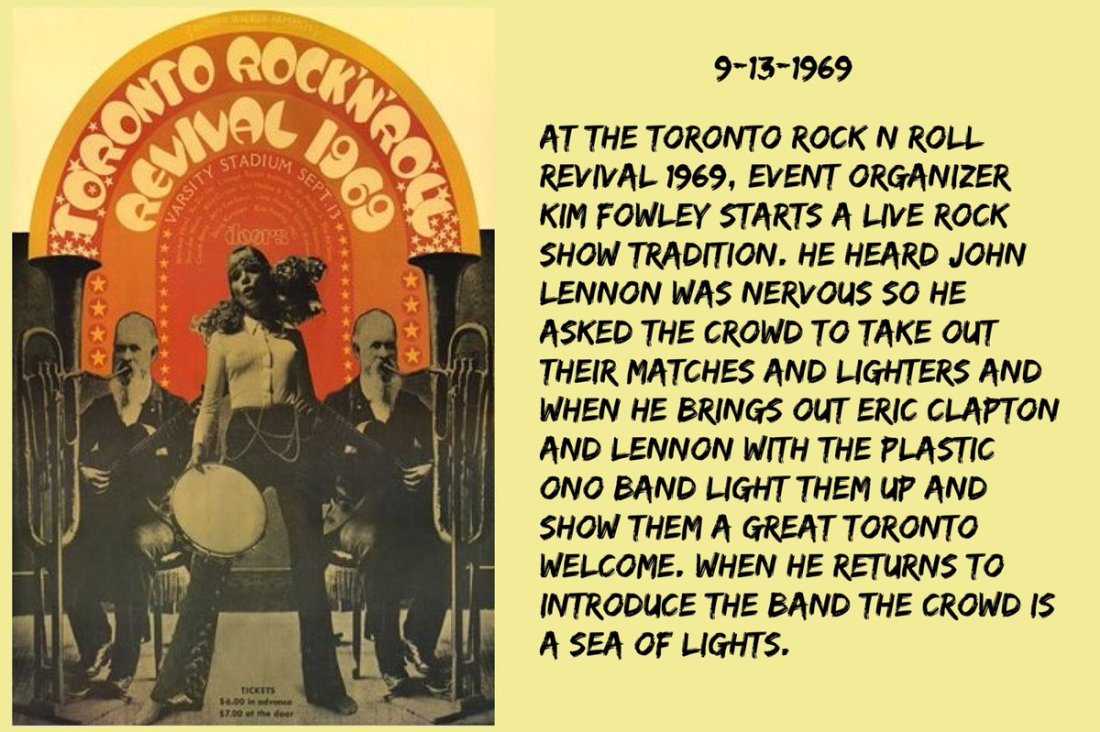
Toronto poster rock-roll-revival-1969

“We got this phone call on a Friday night that there was a rock ‘n’ roll revival show in Toronto with a 100,000 audience, or whatever it was, and that Chuck was going to be there and Jerry Lee and all the great rockers that were still living, and Bo Diddly, and supposedly the Doors were top of the bill. They were inviting us as king and queen to preside over it, not play–but I didn’t hear that bit. I said, “Just give me time to get a band together,” and we went the next morning.” 

–John Lennon, 1969

Well, almost. Toronto promoter John Brower was the man who made this historic phone call. But while everyone else had convened at Leeds Airport the following morning, John and Yoko were still in bed, and guitarist Eric Clapton apparently was unaware of the plan. He soon received a call from Brower: “Eric, you may not remember me, but I’m the promoter who lost $20,000 on your Blind Faith show last month. Please call John Lennon, and tell him he must do this or I will get on a plane, come to his house, and live with him, because I will be ruined.”

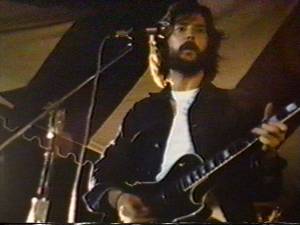
Toronto Clapton live_peace

For this show John had collared a handful of people he knew. Eric Clapton had played the classic guitar line on George Harrison’s song “While My Guitar Gently Weeps” on The White Album the year before, as well as providing lead guitar for John’s performance nine months earlier at the Rolling Stones’ Rock and Roll Circus. Klaus Voormann he’d known since the Beatles’ days rocking Hamburg at the Kaiserkeller club, as well as designing the album cover for Revolver, for which he won a Grammy Award for Best Album Cover, Graphic Arts. Klaus became an accomplished cover artist and from 1966 to 1969 was bassist for Manfred Mann.

Toronto Alan White

At seventeen years age, Alan White chose music over technical school and toured with Billy Fury’s Gamblers and Griffin, the band where John Lennon saw him in a club. At first White disbelieved the call he got from John, thinking he was a prankster, but luckily chose to accept the invitation to play. In 1972 he joined Yes as their permanent drummer.

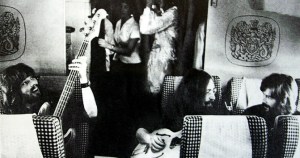
Toronto PlasticOnoBandKlausJohnEricTorontoFlight69

(Clapton, Lennon & Voorman on the plane to Toronto, 1969)

John reluctantly crawled out of bed. Long story short, they arrived backstage around 10 p.m. and waited in their dressing room before they were announced by guest emcee Kim Foley at midnight. I can’t imagine the kick this concert must’ve been for John, and nerve wracking, since he’d be following on from the idols who’d inspired him to play rock and roll. Actually, I can imagine, since John said as much to Jann Wenner in his historic Rolling Stone interview in 1970:

“I just threw up for hours until I went on. I nearly threw up in ‘Cold Turkey’–I had a review in Rolling Stone about the film of it–which I haven’t seen yet, and they’re saying, ‘I was this and that’. And I was throwing up nearly in the number. I could hardly sing any of them, I was full of shit.”

The Doors headlined the one-day event at the Varsity Stadium of Toronto University. The Toronto Rock and Roll Festival included an all-star lineup featuring legends Bo Diddly, Chuck Berry, Gene Vincent, Little Richard and Jerry Lee Lewis, plus Jr. Walker and the All-Stars. Among the up-and-comers were relative unknowns like Alice Cooper and Chicago Transit Authority, as well as lesser known acts such as Cat Mothers and the All Night Newsboys, Doug Kershaw, Screaming Lord Sutch, Nucleus, Milkwood, Tony Joe White and Whiskey Howl.

It’s not often noted but the other performers were also having a good time. At this point only fifteen years had passed since the birth of rock and roll, and a lot of these guys were relatively young. While this may sound strange to the young people of today, by the standards of the 1960’s rock crowd, they were ancient. The oldest artist was Bo Diddly at age 41, followed by Little Richard at 37; both Gene Vincent and Jerry Lee Lewis clocked in at a youthful 34. Chuck Berry was 43 but he could still play and duckwalk. Yeah, at my age I say people that age are still in diapers. What would that say about John Lennon, who was less than one month away from his 29th birthday?

Toronto card Kim Foley introJohn stepped in front of a live audience for the first time in three years and said, “We’re just going to do some numbers we know, you know, because we’ve never played together before.” And thar’s how the Plastic Ono Band was born.

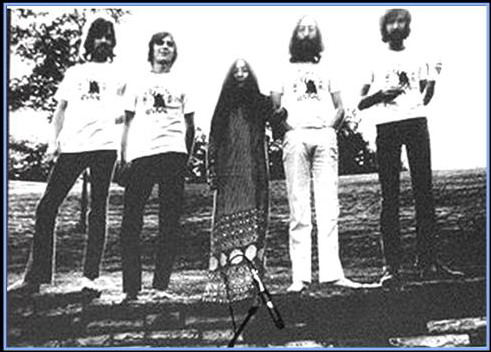
While he might have pulled this band out of his ass, and the total rehearsal time encompassed their flight from London to Toronto, they put on a decent performance. They started off with the classics–“Blue Suede Shoes”, “Money” and ‘Dizzy Miss Lizzy”. This would be the second and last time John would perform “Yer Blues” live, again with Clapton as lead guitar, and boy does he love that fuzz guitar.

Toronto performance

Then John cut in and said, “This is a song about pain”, before launching into the live debut of “Cold Turkey”. John had not officially recorded the song yet; that would come eight nights later on September 25 at EMI Studios. And thus began a pattern of performing a song live before he’d committed it to vinyl, as he would with his later song “John Sinclair”. It’s not all that unusual; Pink Floyd auditioned future songs from Dark Side of the Moon for months before sitting down to record that classic album. The band managed to hash their way through, though the moaning and shrieking at the end of the upcoming single would be remarkably abbreviated tonight.

Yoko…ah Yoko does her usual performance art wailing. “This is what we really came here for,” John said as he led the audience through a loose rendition of “Give Peace a Chance.”

Toronto lennon

Then it was Yoko’s turn. For the first two tunes she’d laid on stage in a white bag. Well, now the cat was out of the bag. “Don’t Worry Kyoko” was mercifully short at 4:18 minutes, though it might have felt longer. For her second number, “John, John (Let’s Hope for Peace)”, Clapton grooved on a single riff while Yoko inflicted new dimensions of pain for 12:39 minutes. To be fair the keening was at least tolerable while supported by John’s guitar feedback.

“At the end of “John, John”, all the boys placed their guitars against the speakers of their amps and walked to the back of the stage. Because they had already started the feedback process, the sound continued while John, Klaus, Alan and Eric grouped together and lit ciggies. Then I went on and led them off-stage. Finally I walked on again and switched off their amps one by one.”-

-Mal Evans

Toronto grop photo POB2

(Group photo of the Plastic Ono Band, 1969)

Toronto was a turning point for John. It gave him the confidence to step beyond the outsized shadow of the Beatles. On the plane ride over he’d already confided to Allen Klein that he was leaving the group. A week after the festival, John told the group, “I want a divorce.”


the Toronto Dreams Project Historical Ephemera blog:

http://torontodreamsproject.blogspot.com/2014/03/how-toronto-helped-break-up-beatles.html

Beatles Bible entry on the Toronto Festival:

Plastic Ono Band live at the Toronto Rock and Roll Revival festival

Available on: On September 25, on the eve of the release of Abbey Road, the actual final album by the Beatles, John mixed the tapes of the Toronto concert into stereo at EMI Studios. These were taken to Apple by Geoff Emerick. The album cover was gorgeous in its simplicity, a single puffy cloud on a sky-blue backdrop. Live Peace in Toronto 1969, the first record by the Plastic Ono Band, was released on December 12, 1969.

Toronto LivePeaceCover    R-522067-1521967993-3235.jpeg

An early version of “John, John” could be heard at the beginning of “Amsterdam”, which is a collage of musical interludes and dialogue taken from their first bed-in earlier in 1969. That track takes up the entire second side of John & Yoko’s Wedding Album, released October 20, 1969.

Famed filmmaker D.A. Pennebaker was on hand to record most of the concert, released in 1971 as Sweet Toronto. Then at one early screening Janis Joplin called out during a song by Chuck Berry, “Keep On Rockin’!”, which became the title of the 1973 version without the John & Yoko sequences. The full film would not be seen again until its re-release in 1988 for television and home video as John Lennon & the Plastic Ono Band Live in Toronto ’69 by Shout Factory.


Mikes’ latest book, FATHERS AND DAUGHTERS, is available at amazon.com.

f & d cover

Mike’s Amazon page:

https://www.amazon.com/Mr.-Michael-Robbins/e/B00CMHSMYA

https://www.amazon.com/Mr.-Michael-Robbins/e/B00CMHSMYA

Elton John a perspective

elton-john-eyewear-bb13-beat-2019-billboard-1548

“Rocket Man ” was the first Elton John song that I fell in love with. It wasn’t even mine, my brother Kenny bought it, god rest his soul. The first single I bought on my own was “Daniel”, which I traded away. I guess I was disappointed at the time because it wasn’t a rocket like lot of his stuff was. Today I can say, “you IDIOT, why would you give that record away? It was a great song!” Maybe I share Elton’s lack of judgement; in his recent book Me, he admits that he thought “Don’t Let The Sun Go Down On Me ” was a terrible song: funny how things will look so different in retrospect.

elton-john-rocket-man-1972-15    elton john daniel

He was fortunate to have ‘come out ‘ in 1967, the very year that the UK struck down its law making homosexuality illegal. Or we should say he was Found out by his boss Long John Baldry: “Oh come on, don’t you know you’re gay?”(or words to that effect).

It never bothered me that Elton was bi or gay or whatever. I just loved the music, his preferences were his own business. Gay wasn’t a thing people talked about when I was growing up, at least not around me, so I didn’t have a chance to be indoctrinated by anybody’s paranoid ravings. It’s just funny now. For instance I always liked Queen from the beginning and I never got the gay reference in their very name. Didn’t know, didn’t care. Those fellas could still rock.

Elton’s early records came out on the Uni label, a division of MCA Records, which is how his early singles like “Rocket Man ” looked like that in America but by the time “Daniel ” came along everything was on that black MCA label.

Oddly enough the songs I listened to first weren’t actually sung by Elton. “Lady Samantha” was a song I loved and picked up on my dad’s Three Dog Night record from 1969, ‘Suitable For Framing “. I remember we were at his cabin in Lake Land Village,  a development over the Tacoma Narrows Bridge near Allyn, Washington. Three Dog Night was also the first band I heard doing “Your Song ” on an album I got for Christmas of 1971, “Golden Biscuits “. Elton’s version was already a year old by then.

ELTONMUP

Of course he was also notable for announcing that he was retiring, and then coming right out of retirement a few months later. For some reason retirement just didn’t seem to take with Elton. The first time he said that was 1976 or ’77: didn’t last long.  He’d be in a slump for a while but that was okay: he’d give himself a jumpstart like his live Melbourne shows in ’86 or ‘The Lion King ‘ soundtrack.

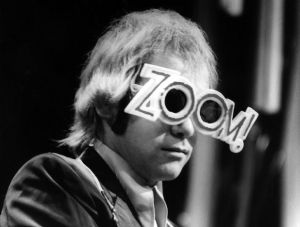
Maybe I also liked Elton because he wore glasses.  So did John Denver but see the thing was, in the 1970s glasses were not sexy. I always wore glasses and I was never good at sports at any level of schooling. If you wore glasses, you were a four eyes: if you couldn’t play ball, you  were a faggot–sorry, their words.

elton john glasses 1    elton's glasses.4 jpg  elton's glasses 1974

Elton wore ’em, so did John Lennon. Not only that but Elton made them a fashion statement.  He had a gift for flamboyance unmatched in the rock world,  which is saying something considering it was par for the course with acts like David Bowie and KISS on the loose. I always appreciated Elton’s music and his example, and I thought I’d say so now.

The foregoing was inspired by Elton John ‘s 2019 biography Me, published by Henry Holt and Company.

me elton john book

‘Give Peace A Chance’, 50 years young this year

Lennon 9521595

(photo by Roy Kerwood, May 1969)

I may be cheating, ’cause technically this isn’t a live number at all. It wasn’t even recorded at the same bed-in. The first bed-in, immortalized in the soon-to-be borning single “The Ballad of John and Yoko”, began March 25 to 31st in Room 902 at the Amsterdam Hilton, the Netherlands, five days after their wedding in Gibraltar. Media saturation was the key, bringing in TV and film interviewers, or anyone with a camera or tape recorder to hear their message of peace. Of course it was all recorded and released as film and audio.

Lennon give peace

For the second bed-in they settled into Room 1742, Hotel Reine-Elizabeth in Montreal, Quebec. From May 26 to June 2nd, they again hosted radio and TV broadcasters, journalists and other visitors, and on the second-to-last day recorded one of the most enduring peace anthems of our generation in five minutes flat. It was taped on borrowed equipment with John on acoustic guitar and a host of friends chanting along to the chorus. A simple song with a powerful and irresistible message. Soon it would be established as part of John’s concert entourage, in one form or another.

LENNON-4

Single release date: July 4, 1969 (UK)

Available on: Apple single 1809, anthologized on Shaved Fish (1975), The John Lennon Collection (1982 Geffen), Lennon Legend (1997), Working Class Hero: the Definitive Lennon (2003), Power to the People-The Hits (2010). A rehearsal recording was released on John Lennon Anthology, CD-1 Ascot (1998).

Selected audio highlights from the first bed-in from Amsterdam comprised Side Two of their last experimental LP, The Wedding Album, released November 7, 1969.

Filmed highlights: Honeymoon (1969, 60 minutes), Imagine: John Lennon (1988), John and Yoko: the Bed-In (1990 home video), Bed Peace (2011)

Links: 

http://www.edmontonjournal.com/Kerwood+took+this+1969+photo+John+Lennon+Yoko+record+Give+Peace+Chance+their+famous+Peace+Queen+Elizabeth+Hotel+Montreal+Timothy+Leary+bottom+photo+Tommy+Smothers+playing+guitar+with+Lennon+Teenage+photographer+Kerwood+event+Montreal+radio/9521595/story.html

The Beatles Bible:

Give Peace A Chance


December 11, 1968 The Dirty Mac at the Rock and Roll Circus

In what might be the last act of the Beatles-vs-Stones rivalry, following a year after Magical Mystery Tour bombed, the Rolling Stones unleashed a literal circus of their own. A better production was presented to all, though it wouldn’t see the light of day till 1996. The Rock and Roll Circus incorporated actual elements from Sir Robert Fossett’s Circus, including acrobats, a fire-eater and a trained tiger, for starters, along with Jethro Tull, coming off their first album, Taj Mahal, The Who and Marianne Faithful. Also debuting for the first and only time was the Dirty Mac, a super group headlined by Beatle John Lennon.

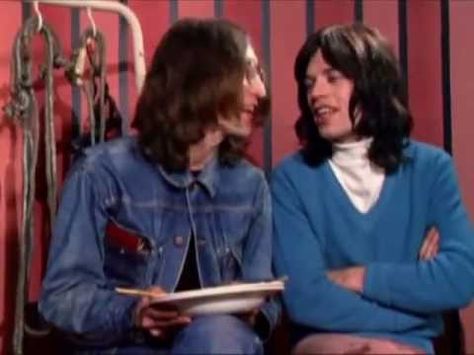
Directing chores fell to Michael Lindsay-Hogg, who’d already helmed many of the Beatles’ promotional films (“Rain”, “Paperback Writer”, “Hey Jude” and “Revolution”), and was doomed to direct the Get Back/ Let It Be film. The irony is not lost here as this special was filmed partly as a promotional  tool for the Stones’ just-released record Begger’s Banquet. When his turn came, John and Mick Jagger sat through an awkward introductory segment wherein Mick almost completely loses his accent. Then John joins his mates live before an invited studio audience.

679e2b9487b1a30afc6075c62c58bcb8--dear-john-mick-jagger

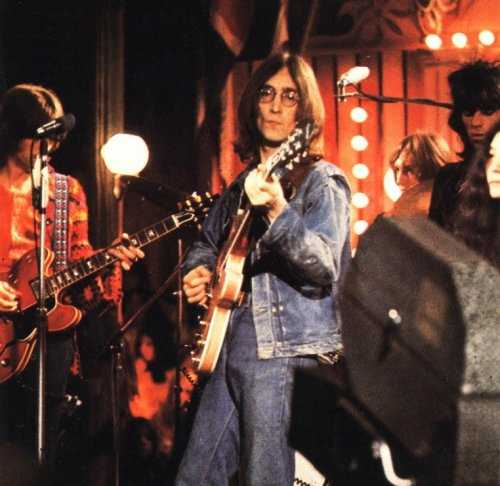
For this two-song set John assembled a stellar backing combo: Eric Clapton on lead guitar, Mitch Mitchell from the Jimi Hendrix Experience on drums, with Keith Richards from the Stones on bass and John on rhythm guitar. And what’s that black bag moving on the floor?…Oh right, that’s Yoko.

The-Dirty-Mac-Circus-1200

First up is a thumping rendition of “Yer Blues”, fresh from The White Album which had only just arrived in record stores three weeks before. This was a rockin’ cover considering that, for the most part it’s clearly not the same players. First John takes the solo, then Clapton steps in, and never was a sideman more apropos to a blues rendition.

The Dirty Mac circus

Now joined by ‘perpetual violinist’ Ivry Gitlis, Yoko Ono emerges from her bag after this first song for what starts out as a pleasant little jam. Yoko’s screams don’t even start until they’re a minute and a half in. Luckily they only had to jam for four and a half minutes. Provisionally titled “Her Blues” by John, it wound up on the eventual album release as “Whole Lotta Yoko”.

By the time the Stones took the stage it was 2 am and most of the studio audience had left. Even so, John introduced them with a sly “And now…”, at which point they jump right into “Jumping Jack Flash”. And if some of the audience had left, a lot of those who were left, in their fancy dress and red or yellow blankets were on their feet dancing. Now all that was left was to prepare for broadcast.

This gathering of the stars would not see the light for another couple of decades, however. One story says the Stones felt upstaged by the Who’s performance of “A Quick One While He’s Away”. Another is that they were disappointed in their own performance. That’s a hard one to swallow since, despite the fact that the Stones were exhausted and quite honestly on drugs, they put on a pretty damn good show. One possible reason that rises above the others might be that this was the last public appearance of Brian Jones with the group. The less said the better, for though he was present, well…apart from his slide guitar on “No Expectations”, most of his contributions were inaudible. In an odd turn of events, neither Brian nor John would be around to see this special released to the public.

stones-rock-and-roll-circus-sm

Available on: The Rolling Stones Rock and Roll Circus, released on VHS, laser disc and CD, October 1996, following two days of screenings at the Walter Reade Theater during the New York Film Festival. The DVD followed in October 2004. This was reissued as The Rock and Roll Circus Expanded Edition 2-CD set & The Deluxe CD-DVD-Blue-Ray Edition in April 2019.

Note: the reissue includes unreleased tracks such as “Revolution Rehearsal”, a disjointed uptempo version of “Revolution 1” from The White Album, which slaps the ‘all right’ refrain on top instead of the bottom of the song; a “Warmup Jam” and an unused second take of “Yer Blues” where Clapton lays down an even bluesier twang.


Mikes’ latest book, FATHERS AND DAUGHTERS, is available at amazon.com.

f & d cover

Mike’s Amazon page:

https://www.amazon.com/Mr.-Michael-Robbins/e/B00CMHSMYA


The spirit of Woodstock should animate us all

woodstock-1969-dancing-1-1200x630

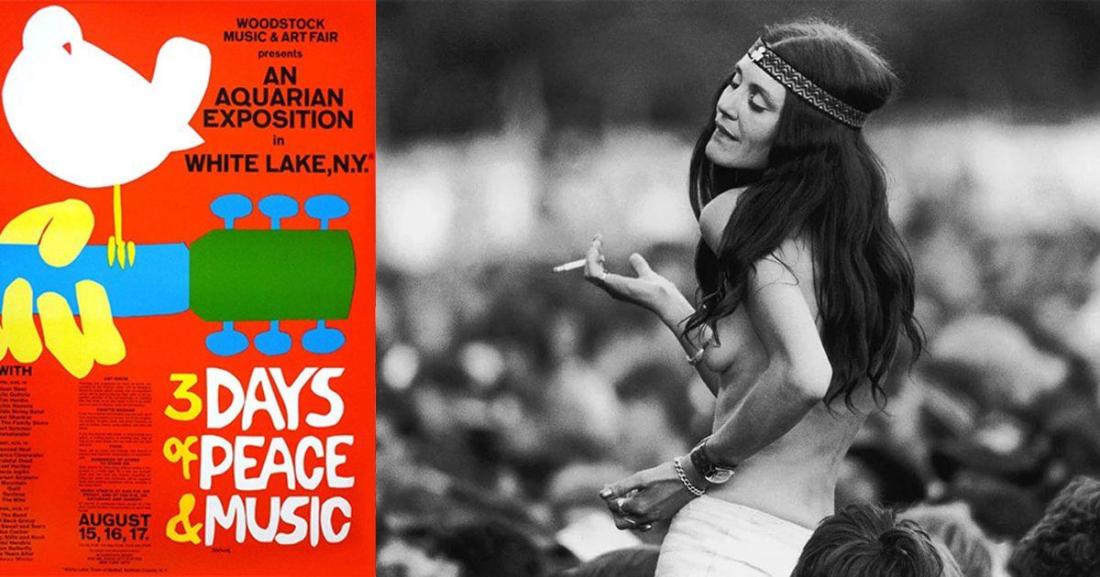
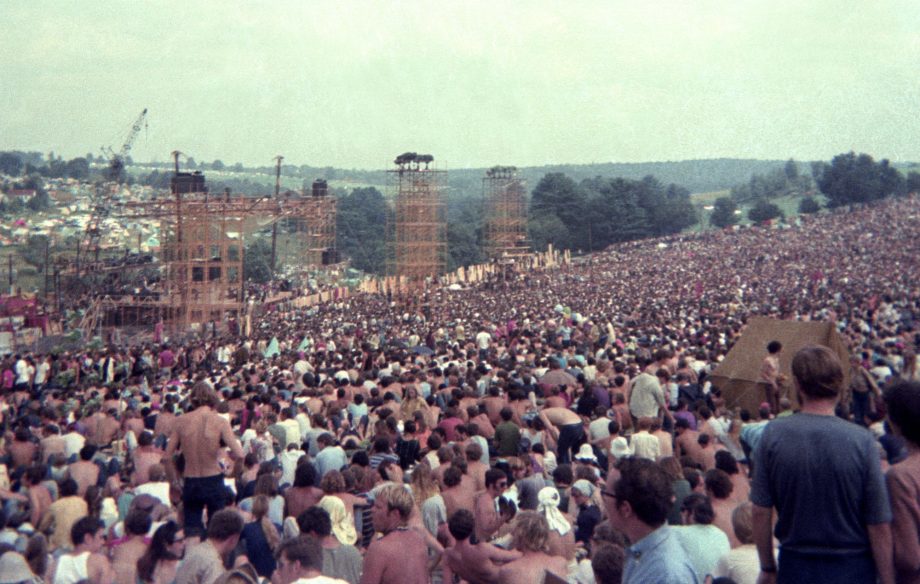
We don’t need a Woodstock 50. Right now we are so divided, so unrighteous as a so-called Christian people, we could never pull it off. You know what, yes, it was messy, there was drugs in the juice you drank and frankly once it was over, Yasgur’s Farm probably looked like a war zone. It actually happened in Bethel, NY, 43 miles from the actual Woodstock. And it was the last time such an event could happen. But god, think about it.

Damn right, just stop, think about this. At its peak there were 400,000 young people gathered in its muddy fields. Apart from two people who died {one from being accidentally run over by a tractor and the other from ‘insulin usage’], there was no violence, no murders–but there were two births. Almost half a million kids got together for four days of peace and music. I would challenge any Trump rally to boast as much.

woodstock-920x584

Never mind, they can’t. Their forte is rancor and racism. Every time I put on Crosby Stills Nash & Young’s song “Woodstock”, I repeat it, at least four times. One, because I love it and two, I think we could all do with getting back to the land, back to the ideal. It became part of a story I once wrote about a concert, a very special concert. I was five years old when Woodstock happened, but that whole ’60’s vibe kind of informs the writing I do, that spirit of unity and brotherhood that crossed artifices such as race and gender.

I’d probably sell more books if I had pursued the whole Dystopian Future model. It certainly worked for the Hunger Games. I don’t think we need that. We’re already heading for a dystopian future as far as I’m concerned. You don’t have a future if its built on cynicism. All you wind up with is…well, what we’ve got now. I don’t want the people I write about to be in a world so f—ed up that I wouldn’t want to live in it. We have to believe we’re better than this. If we don’t believe we can make things better [and I’m speaking broadly here], we’ll never work to make it happen. And then we might as well all be the mindless drones our rich oligarchs expect us to be.

Naïve? Perhaps, but until something better comes along I’ll stick with it.


woodstock-jonimitchell


Mikes’ latest book, FATHERS AND DAUGHTERS, is available at amazon.com.

Mike’s Amazon page:

https://www.amazon.com/Mr.-Michael-Robbins/e/B00CMHSMYA

f & d cover

Artists United Against Apartheid- “The Struggle Continues”

miles davis montreal jazz fest 1985.jpg2

Miles Davis is a difficult man to like. He was parsimonious when it came to sharing credit on his compositions and abusive to his wives. Worse, he felt obliged to brag about it. But he was also a jazz genius, a would-be boxer with sickle-cell anemia and, late in his life, diabetes; a man who’d storm onstage for a concert against his doctor’s advice while he was fighting pneumonia.

That being said, civil rights did seem to be something he cared for. In 1985 South Africa was very much on Little Steven Van Zandt’s mind, particularly the resort Sun City, which was planted right in the middle of one of the desolate bantustans imposed on the native South Africans by white Afrikaners. Ronald Reagan’s policy as President was a thing called ‘constructive engagement’, a double-speak term that amounted to encouraging business investment in South Africa in the hope that this would change their racist policies.

little steven

Little Steven had a different vision. Recall that this was a time in the 1980’s when large charitable events involving large collectives of pop artists had briefly become the norm. Farm Aid was just around the corner in the U.S., and continues to this day. Live Aid, “We Are the World” and “Do They Know It’s Christmas?” had all brought awareness of the drought and starvation of Ethiopians. But the pop response to the Ethiopian crisis was largely apolitical; it didn’t address the conflicts that had brought this famine on the Ethiopian people.

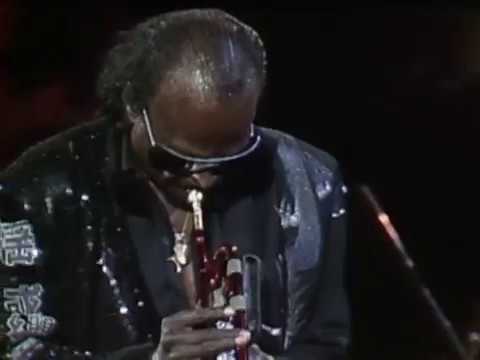
The Sun City project was different. It had to be. If there was to be change, you had to address the root of the problem, which was the government-sanctioned program of Apartheid. Like all these projects Sun City did not lack for enthusiastic volunteers. And from the first day, producer Arthur Baker and Little Steven thought, ‘Wouldn’t it be wild to get Miles Davis to play trumpet over this drum log”, on the demo record?

As it happened, Miles’ sound man had also been Little Steven’s sound man on one of his tours. the job of contacting Miles fell to Danny Schecter, a journalist who early on became involved with the project. Now honestly, Miles Davis was a hard man to get ahold of, but when Schecter made the call, the immediate response was, “When do you want me there?”

On the big day Miles laid down his part over two takes, which would soon form the bedrock of what would become the jazz session for the album. Towards the end of the first take, he did the kind of unexpected thing he was famous for. In a rasp barely above a whisper he muttered, “You can’t go in there, you’re the wrong color.”

This was not planned; it was all just improvisation on Miles’ part. Baker and the others thought at first he was talking about the cameraman who was there to film all the project’s sessions. They soon realized Miles was talking about South Africa, so baker said, “Keep those tapes rolling.”

At this point recording technology had advanced to the point where it wasn’t really necessary for every artist to perform their part in the studio all at the same time. It was possible to record all the different parts and mix them all together later into a coherent track. That’s how “The Struggle Continues” came together, and how through electronic means the Miles Davis Quintet was reunited.

Miles+Davis quintet 1966

Keyboardist Herbie Hancock had cut his teeth with Miles’ Quintet in the mid-60’s and had made quite a name for himself as the leader of his own group the Headhunters in 1973. More recently he’d experimented with dance and funk, most especially with his 1983 single “Rockit”. He would be the first artist to play behind Miles’ track, and he would blow everyone’s mind with the seven-minute solo he laid down.

One problem. Little Steven knew Hancock’s work was great, but it wasn’t going to work with Miles’ stuff. Luck was with them. In a few weeks Hancock would be performing at the Village Gate in New York with bassist Ron Carter and drummer Tony Williams, the other members of Miles’ classic Quintet. The Sun City crew assembled at M & I Recording, where Williams had been recording his latest album, there to overdub their parts onto Miles’.

Keyboardist Richard Scher and Nigerian drummer Sonny Okusons had already contributed their parts. A friend of Little Steven had brought his three-year-old son to these sessions. As the musicians were leaving Steven asked, “Well, Sam, what do you think?”

“It needs some guitar,” Sam replied.

Out of the mouth of babes. The next day the great Stanley Jordan added his guitar.

Now on to the track itself. I’m not a jazz expert, I can only give you my best with my pallid ear, but here goes. A slow fade in on the horn brings you to those furious rolling drums. The trumpet sounds an urgent call to action. Two minutes in comes Herbie Hancock’s part, and he’s on fire. Underlying the entire track is a solid bass by Carter and then at four 1/2 minutes we hear Miles’ accusation: “You can’t go in there, you’re the wrong color.”

Sun City was released on December 7, 1985. I’d just like to note that Nelson Mandela was released from prison less than five years later on February 11, 1990. Apartheid died a well-deserved death by 1994. I’d like to think Little Steven and all the artist involved in Sun City did their part to make that happen.


“The scariest encounter of the Sun City project had to be Miles Davis,” recalled Steven Van Zandt. “I wrote the intro for him to play… He’s just not friendly. He makes Lou Reed look like a pussycat… He came in, sat down and I played him the ‘Silver and Gold’ tape. He’s sitting next to me, and he talks real low and slow, and right in my ear: ‘Hey man, do you want me to fucking play or what?’ So he does his take, and I asked him to redo it with the mute on. I went and reassembled his old quintetwith Herbie HancockRon Carter on bass and Tony Williams on drums.”[2]

[wikipedia entry, Sun City]

R-5074800-1496952871-5448.jpeg

Let Me See Your I.D.–Artists United Against Apartheid, 1985

artists-united-against-apartheid-let-me-see-your-id-street-mix-1986It isn’t often that a rap song changes my perspective. I’m admittedly not a great fan of rap music; if I want to be yelled at, I have people I work with for that. On the other hand it does throw in some off-the-wall references to kung fu, literary figures and historical events we don’t want to think about.
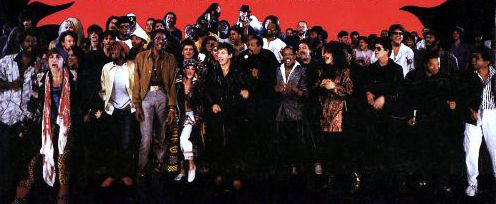
In 1985 Little Steven Van Zandt drew together a unique collective of musicians from across the spectrum, for the purpose of protesting against the racist Apartheid regime in South Africa. The project Sun City drew its name from the glittering resort in the so-called ‘homeland’ of Bophuthatswana, which was meant to showcase the ‘greatness’ of white South Africa, and which had already attracted prominent pop artists to perform at their casino.

A-143887-1110649709.jpg

Perhaps today it can be seen as an artifact of the late ’80’s; or, it may have a frightening relevance considering the exposure of the filthy underbelly of white supremacy here in our United States. What I referenced in the beginning of this piece was Sun City‘s rap track, “Let Me See Your I.D.”, meaning the passbooks all black South Africans over the age of 16 were required to carry on them at all times. If it was not produced on demand, black persons would be jailed and fined. As of 1985,13 million people had been jailed for pass law offenses.

It begins with a concept so obvious that it shouldn’t be so mind-blowing. Grandmaster Melle Mel chants, “Everybody uses black & white/ to draw the line between wrong & right/ but If you use your eyes you can really see”, that ‘white’ is really pink while skin that’s ‘black’ is really brown. Think about that; your skin is not white. Peach at best, maybe. And black, well, that covers a range of shades, none of them pure black.

Poet and novelist Gil Scott-Heron provides a running narration as subtle as the raps are not. “The word casualties comes up a lot…people are talking about isms…” But people are dying, he says, and there’s nothing casual about that. “Let Me See Your I.D.” showcases the talents of Grandmaster Melle Mel, Scorpio from Grandmaster Flash & the Furious Five, Peter Wolf, Kurtis Blow, the Fat Boys, Gil Scott-Heron, Sonny Okosuns, The Malopoets form South Africa. Jimmy Cliff, Duke Bootee and more.

Sadly this track is unavailable for download and I could only find it online as a vinyl single. If you want to hear it today, ironically enough you’d have to find an unauthorized upload on YouTube and break the law.

sun city list  images s afr boycott


Rubber Soul as it should be

Rubber_Soul

I’ve just realized why Rubber Soul was never one of my favorite Beatles albums growing up. I had no way of knowing better of course; did any of us know in the fall of 1965? You see the problem was, we were getting the Americanized version.

A sign of a great work of art is its openness to more than one interpretation. In his blog Psychobabble, Mike Segretto gave the impression  that certain alterations were an improvement on the original British LP; that these substitutions were more in line with the folk-rock stylings of the majority of the set. On that count, I respectfully disagree. The rock numbers [“Drive My Car” & “Nowhere Man”] I feel balanced out the introspection of “Norwegian Wood” & “In My Life”. There is very little question that the British album was the better of the two versions.

Granted the classics were all in their proper places—“Norwegian Wood (This Bird Has Flown)”, “Michelle”, “In My Life”, even “The Word”. The point is, I grew up listening to what was provided by Capitol Records. Capitol was the American distributor for EMI-Parlophone Records in the U.S. And they butchered Rubber Soul.

rubber soul UK back

The back cover of the UK release, at least the remastered CD from 2009 

rubber soul US Capitol back

Running order of the Capitol Records release

The first sin they committed was to strip four songs from the original LP, ie “Drive My Car”, “Nowhere Man”, “What Goes On” & “If I Needed Someone”. This was standard practice for Capitol: take a few songs off one Beatles album and collect as many as possible into a ‘new’ album. Something New [July 1964] may be the most egregious example of such mash-ups, and I’m saying this as someone who does in fact prefer some of the American LPs over their British counterparts.

Here’s what rubs me; two of those songs were among the strongest tracks the Fabs had done in this period; and they substituted two of the weaker tracks from the British Help! LP. If I may digress, Capitol got a lot of mileage out of that record. Over the following two  years they managed to spread those six Side-2 songs over three different albums. Most of us who grew up in the ‘60’s didn’t realize how badly we’d been gipped until the official British albums saw their first CD release in 1987. That was the year we in America finally received Rubber Soul in its full glory, as God [or the Fab Four anyway] intended.

The UK version opened with a strong lead-in, ‘Drive My Car”; the Capitol album had the temerity to replace that with the significantly weaker number, “I’ve Just Seen a Face”. Worst of all, “Nowhere Man” was also taken off the Capitol release. I never knew it was supposed to be on Rubber Soul until I listened to that damn CD for the first time–in 1998! George Harrison had originally been allotted two numbers, “Think For Yourself” & “If I Needed Someone”. I don’t know why I’m so taken with the latter number; that riff just seemed to hook me. It’s mostly the guitar. These are both decent songs, but at a time when George was just beginning to flex his songwriting muscles, Capitol cut his contributions by half.

Adding insult to injury, the one song allotted to Ringo Starr, ‘What Goes On”, the first instance in which he actually received any songwriting credit, was swapped with “It’s Only Love’, a song even John Lennon said was abysmal. Which meant Ringo got NO vocal numbers at all on our side of the Atlantic. In fact, in 1965 Ringo would appear on two, count ‘em, two tracks for U.S. release. One was “Act Naturally”, the B-side of the “Yesterday” single. “Boys” [from The Early Beatles, March ‘65] was part & parcel of the re-re-release of the Beatles’ first Parlophone album Please Please Me–from 1963.

That leaves fully half of the album dominated by Lennon compositions—on either side of the Atlantic—“Norwegian Wood”, “Nowhere Man”, “The Word”, “What Goes On”, “Girl”, “In My Life” & “Run For Your Life”. John Lennon songs tended to dominate Beatles albums up to this point. Rubber Soul would actually be the last time this was the case until the White Album sessions three years later—honestly, mostly on account of John’s growing, admitted laziness.

The four tracks that were stripped from the Capitol album would eventually conglomerate in July 1966 on the Yesterday and Today set, along with the final two orphans from Help!, Side 2, plus three more recent cuts stolen from the upcoming Revolver. And that would be the last time such butchery would be committed against a Beatles long-play.

–“It’s Only Love” was mine. I always thought it was a lousy song. The lyrics were abysmal. I always hated that song.

-John Lennon to David Sheff, The Playboy Interviews with John Lennon & Yoko Ono, @ 1981 Playboy Press

https://psychobabble200.blogspot.com/2014/08/turn-left-at-greenland-part-8-rubber.html